FOSHAN RUBAN MACHINERY GLOBAL CO., LIMITED is a leading one-stop industrial equipment provider headquartered in the heart of China’s manufacturing hub—Foshan. We specialize in the design, supply, and global distribution of professional food processing and commercial kitchen machinery.
Built on the spirit of the legendary Chinese craftsman "Ruban," our company is committed to precision, durability, and innovation. We bridge the gap between world-class manufacturing and the evolving needs of the global food service industry.
Complete Guide to Choose a Commercial Bread Oven. To open a Bakery or Baking Shop. Choose the right oven for stable output and doubled efficiency; Choosing wrong can result in electricity, labor, and damage to the finished product. This article uses clear text and practical points to help you quickly select a commercial bread oven that is suitable for you.
First, let's understand: what are the types of commercial bread ovens?
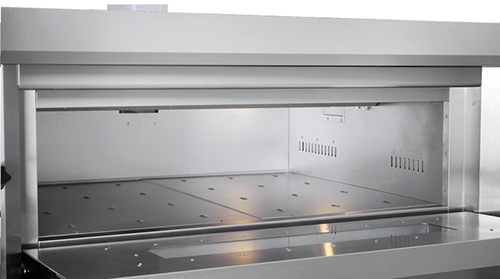
1. Deck Oven (iron and stone deck to choose) - preferred for European bread/baguettes.
Core features: each deck independent temperature control, stone slab heat storage.
Suitable products: European bread, baguettes, soup, pizza.
Advantages: crispy outer skin, beautiful cutting lines, and wheat fragrance.
Suitable for stores: specializing in artisan bread and boutique baking shops
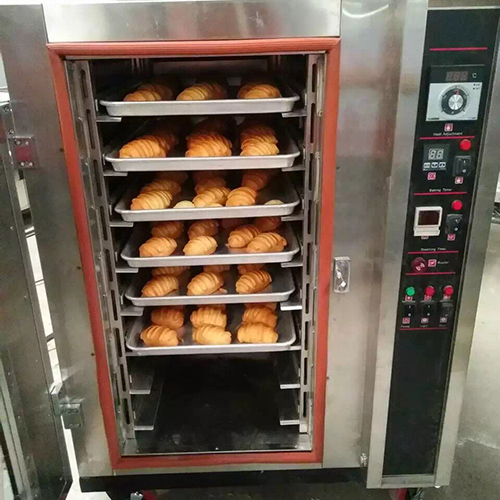
2. Hot air circulation oven (wind stove) - Mass production pastry/toast
Core features: strong hot air, multi-layer baking, uniform heating
Suitable for products: toast, meal buns, croissants, biscuits, puff pastry
Advantages: high efficiency, good consistency, suitable for mass production
Suitable for stores: walk-in bakeries, chain stalls
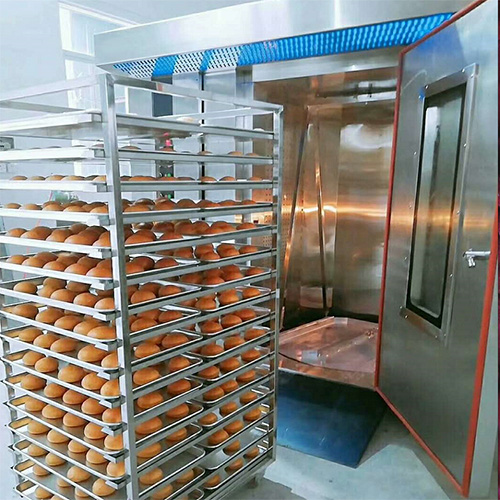
3. Rotating rack oven - Large factory/central kitchen
Core features: super large capacity, continuous baking Suitable for: daily production of thousands of pieces, factory production
Second: 5 core parameters must be considered when choosing:
1. Capacity and number of layers (choose according to production volume)
Small store: one deck two pans / two deck four pans
Medium store: three deck six pans / three deck nine pans
High yield store: three deck twelve pans/four deck sixteen pans
Suggestion: Reserve 20% margin to cope with peak season orders.
2. Energy type: Electricity vs Gas
Advantages of electric ovens: precise temperature control, simple installation, clean
requirements: mostly require 380V three-phase electricity.
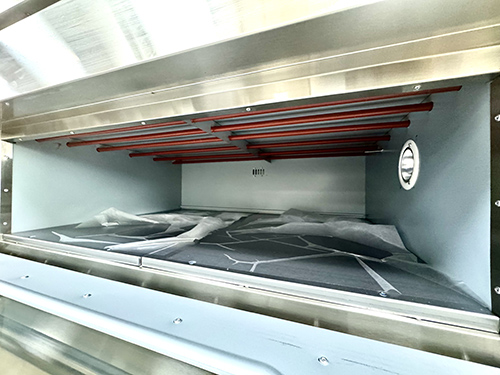
Gas ovens advantages: fast heating, low long-term use cost.
Requirements: gas connection required. Approval for installation.
Suggestion: Small shops should prioritize electricity use; Large factories or big daily baking capacity shops are more choosing gas.
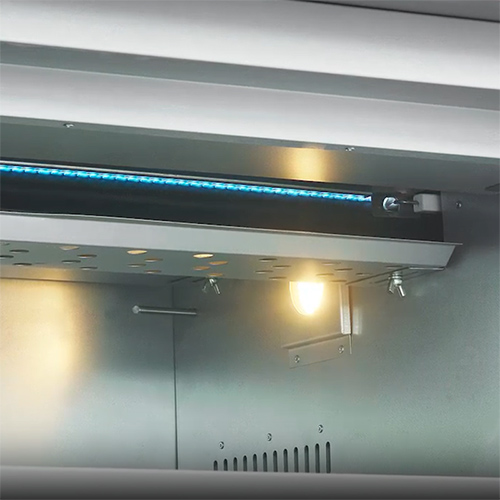
3. Temperature control accuracy (determines whether bread tastes good or not)
High quality commercial oven: temperature difference within ± 3 ℃
Must see function: independent temperature control (upper and lower fire/layered temperature control)
Timing function: easy to use
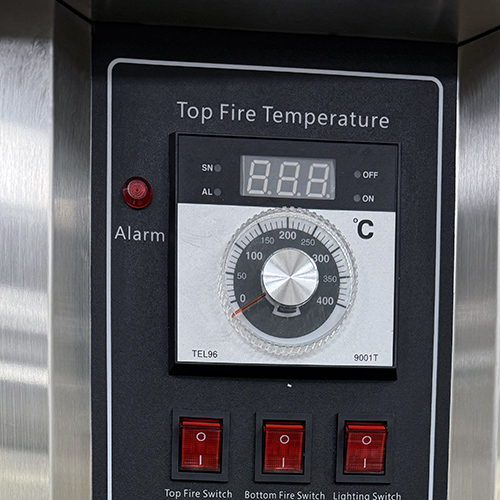
4. Material and workmanship
Inner liner: priority stainless steel, durable and easy to clean
Layers: thickened stone slab/cast iron, good heat storage
Door body: double-layer tempered glass, good insulation, anti scalding
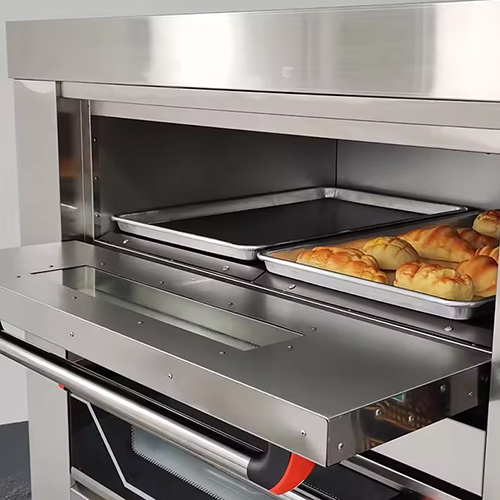
5. Power and installation conditions
confirmed in advance: store voltage, power, air switch, ground wire, mismatched circuit will trip and burn the machine!



 Network Supported